Plants can be terrifying organisms. Trees, however, are generally not often counted among those to be feared. For the vast majority of species, the only harm they are capable of inflicting is caused by falling over at an inopportune moment in time. This is wildly not the case for the manchineel tree (Hippomane mancinella L.). Native to the tropical Americas, primarily Central and South America, the West Indies, and the peninsula of Florida, this plant is commonly known as arbol de la muerte and manzanilla de la muerte, meaning the tree of death and little apple of death, respectively (Adolf & Hecker 2004; Andreu & Friedman 2012; Boucaud-Maitre et al. 2019). Within the genus name, you may notice a familiar name: hippo. This is the Greek word for horse and you might be wondering what horses have to do with a toxic plant. The second part of the genus, mane, is derived from mania, referring to madness. As a whole, Hippomane essentially means horse madness. An ancient Greek philosopher, Theophrastus, bestowed this name upon a plant native to Greece that apparently caused horses to act crazy after eating it. Later on, Linnaeus then gave this same name to the manchineel tree when he described it (Andreu & Friedman 2012). Now that we have addressed the hippo in the room, what makes this tree so damn awful?

A stand of manchineel trees. Not the red paint on some of the trunks, designating them as dangerous. (Wikimedia Commons)
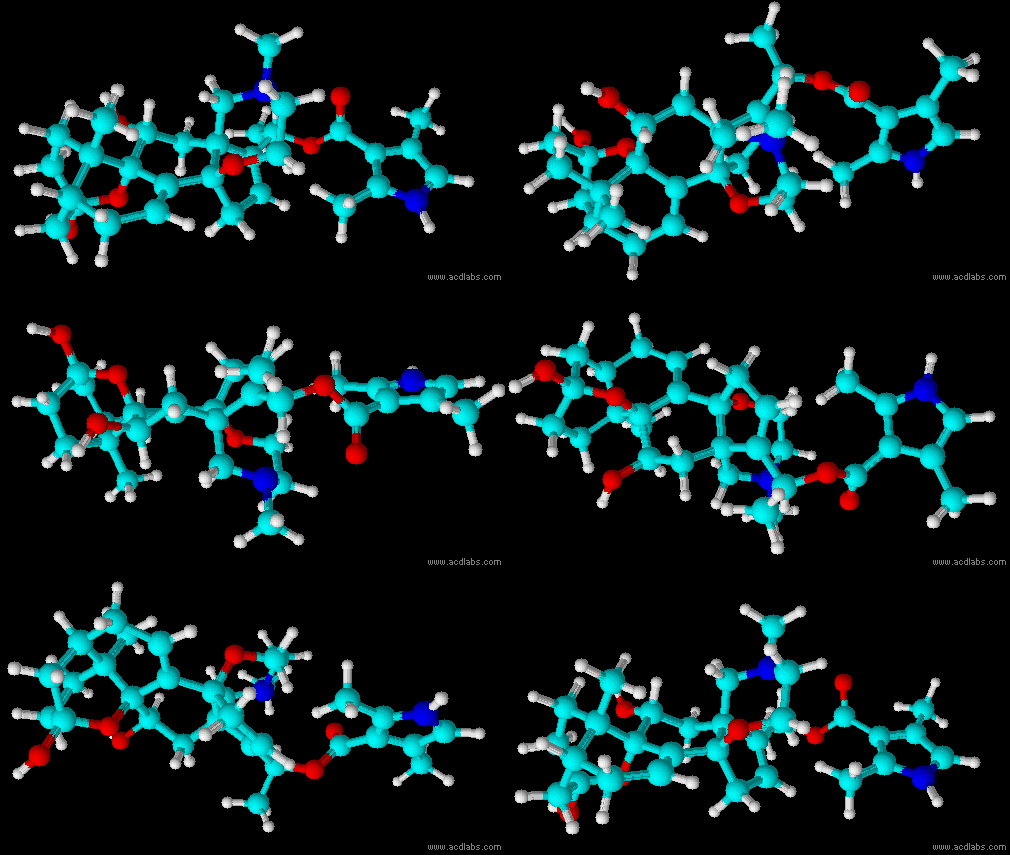
Typically growing to 20 feet tall or so but capable of reaching heights as great as 50 feet, the manchineel is a member of the spurge family, Euphorbiaceae (Andreu & Friedman 2012; Hack 2026; Lauter 1952). This diverse family is famous for the latex that damaged plants produce. You may have even experienced this yourself if you have ever broken a poinsettia leaf during the holidays. It will ooze a milky sap that is slightly irritating to the skin, but nothing more harmful than that. The vast majority of the family is similar. Some, like the rubber tree (Hevea brasiliensis Muell. Arg), are even greatly beneficial to our modern lives through providing a product that has countless uses (Guerra et al. 2021; Jacob et al. 1993). Just like its cousins, the manchineel tree also produces a natural latex (Adolf & Hecker 2004; Hack 2026). But unlike other members of its family, the sap and tissues of this plant are packed with highly toxic compounds that are capable of causing damage, even death, in a wide variety of ways. The main components that make it so dangerous are Hippomanin A and a group of 18 phenolic compounds consisting of various plant toxin chemical groups (Aluja et al. 2020). Direct contact with any part of the plant can result in inflammation, burning, blistering, and formation of lesions (Blue et al. 2011; Pitts et al. 1993). If the sap gets into the eyes, it can cause severe conjunctivitis and inflammation of the cornea leading to intense pain, blurring of the vision, and potentially temporary or permanent blindness (Howard 1981; Munoz & Norton 2024; Pitts et al. 1993). I know what you’re thinking: “That’s easy! I just won’t touch it and I’ll be fine.” Unfortunately, that’s not the case. Even if you don’t directly touch the manchineel, it can still harm you. All you need to do is just be near it. There are many instances of people taking shelter from the rain under this tree, only to be severely wounded from the water mixing with the toxic sap and dripping onto the body (Blue et al. 2011). Cutting any part of the tree creates sawdust full of these dangerous compounds that can come into contact with the skin and eyes and even be inhaled. Burning the wood releases poisonous smoke that can irritate the lungs, eyes, and skin (Munoz & Norton 2024; Muscat 2019).

Leaves and flower spike (Wikimedia Commons)
The fruits of the manchineel are small, about the size of a golf ball, but they resemble a greenish-yellow apple (hence manzanilla de la muerte) and have a similar smell. They can commonly be found scattered on the ground underneath the canopy of the trees or strewn about the beaches they call home. Due to its enticing nature, many a person has mistakenly eaten the fruit. Those who have done so often report an initially pleasantly sweet taste, quickly followed by an intense, burning pain (Stickland 2000). Eating even just a small amount can progresses from pain into dysphagia, excessive salivation, nausea, vomiting, abdominal pain, and diarrhea (Boucaud-Maitre et al. 2019; Strickland 2000). It can also result in ulceration and bleeding of the mouth, esophagus, and stomach (Carroll 1952; Boucaud-Maitre et al. 2019). In some cases, and depending upon how much fruit has been ingested, symptoms can advance to changes in heart rhythm, hypotension, depression of the central nervous system, and potentially death (Hack 2026; Pitts 1993). But eating the fruit alone is not necessary to experience the horrors of the manchineel. Water saturated with leaves and branches becomes poisonous as well (Carroll 1952; Hack 2026; Pitts et al. 1993).

The apple-like fruit of a manchineel (Credit: Hans Hillewaert)
Despite its fearsome nature, the manchineel isn’t all bad. The Kalinago and other Indigenous peoples of the lesser Antilles and Caribbean have historically used the noxious sap to coat their arrows for hunting purposes (Adolf & Hecker 2004; Boucaud-Maitre et al. 2019; Munoz & Norton 2024; Muscat 2019). It is also culturally important for its use in medicines to treat a variety of ailments (Andreu & Friedman 2012; Carroll 1952; Lauter et al. 1952). The root systems of these trees also help give structure to the seashores where they occur, preventing beach erosion (Pitts 1993). Although toxic to many animals, some appear to be immune and will readily eat the fruit or use the trees as habitat (Andreu & Friedman 2012). The small green flowers of the manchineel provide nectar to native pollinators, and honeybees will even create honey from it, which is reportedly non-toxic (Adolf & Hecker 2004; Pitts 1993). Pollinators are not the only insects with a relationship to this plant. Aluja et al. (2020) have explored an extremely close interaction between the manchineel and a species of fruit fly (Anastrepha acris) that exclusively feeds on its fruit. The larvae of the fly appear to have metabolic machinery, most likely microbes, capable of breaking down the toxic compound, Hippomanin A, within the plant’s tissues. This in turn makes the fly’s larvae a suitable and safe host for the endoparasitoid wasp, Doryctobracon areolatus (Aluja et al. 2020).

A warning sign for nearby manchineel trees (Wikimedia Commons)
The manchineel’s reputation as the world’s most dangerous tree has led to its eradication across most of its native range in Florida (Andreu & Friedman 2012; Boucaud-Maitre et al. 2019; Hack 2026; Munoz & Norton 2024; Wunderlin et al. 2025). Because of this and general habitat loss within the state, it is currently listed as an endangered species and only resides in places that are still wild such as the Everglades (Andreu & Friedman 2012; Munoz & Norton 2024; Wunderlin et al. 2025). It is still locally abundant throughout much of its range outside of Florida, however, thus posing a potential threat to those who are unfamiliar with it (Botanic Gardens Conservation International (BGCI), & IUCN SSC Global Tree Specialist Group 2019). As with any organism that can be dangerous to humans, it is important not to villainize the manchineel. Yes, it is capable of inflicting massive amounts of harm; but if it is given space and treated with the respect it deserves, it poses no threat to us and provides many ecological and cultural benefits. The more we learn about it, the more secrets we may uncover as to those benefits, particularly in medicine. The manchineel is truly an incredible and fascinating plant that exemplifies the phenomenal diversity of our planet.
References:
1. Adolf, W., & Hecker, E. (2004). On the Active Principles of the Spurge Family, X. 1,2Skin Irritants, Cocarcinogens, and Cryptic Cocarcinogens from the Latex of the Manchineel Tree. Journal of Natural Products, 47(3), 482–496. https://doi.org/10.1021/np50033a015
2. Aluja, M., Pascacio-Villafán, C., Altúzar-Molina, A., Monribot-Villanueva, J., Guerrero-Analco, J. A., Enciso, E., Ortega, R., Acosta, E., & Guillén, L. (2020). Insights into the Interaction between the Monophagous Tephritid Fly Anastrepha acris and its Highly Toxic Host Hippomane mancinella (Euphorbiaceae). Journal of Chemical Ecology, 46(4), 430–441. https://doi.org/10.1007/s10886-020-01164-8
3. Andreu, M. G., & Friedman, M. H. (2012). Hippomane mancinella, Manchineel: FOR302/FR370, 7/2012. EDIS, 2012(10). https://doi.org/10.32473/edis-fr370-2012
4. Blue, L. M., Sailing, C., DeNapoles, C., Fondots, J., & Johnson, E. S. (2011). Manchineel Dermatitis in North American Students in the Caribbean. Journal of Travel Medicine, 18(6), 422–424. https://doi.org/10.1111/j.1708-8305.2011.00568.x
5. Botanic Gardens Conservation International (BGCI), & IUCN SSC Global Tree Specialist Group. (2019). IUCN Red List of Threatened Species: Hippomane mancinella. The IUCN Red List of Threatened Species. IUCN Red List of Threatened Species. https://www.iucnredlist.org/en
6. Boucaud-Maitre, D., Cachet, X., Bouzidi, C., Riffault-Valois, L., Dupuy, C., Garnier, R., & Langrand, J. (2019). Severity of manchineel fruit (Hippomane mancinella) poisoning: A retrospective case series of 97 patients from French Poison Control Centers. Toxicon, 161, 28–32. https://doi.org/10.1016/j.toxicon.2019.02.014
7. Carroll, M. N. (1952). The Pharmacology and Toxicology of Extracts, Extractives and Crystalline Substances Obtained from Hippomane Mancinella L. [Ph.D., University of Florida]. https://www.proquest.com/docview/302035970/citation/15C0955433894D24PQ/1
8. Guerra, N. B., Sant’Ana Pegorin, G., Boratto, M. H., de Barros, N. R., de Oliveira Graeff, C. F., & Herculano, R. D. (2021). Biomedical applications of natural rubber latex from the rubber tree Hevea brasiliensis. Materials Science and Engineering: C, 126, 112126. https://doi.org/10.1016/j.msec.2021.112126
9. Hack, J. B. (2026). Toxicology Answer: The Manchineel Tree. ACEP Now. https://www.acepnow.com/article/toxicology-answer-the-manchineel-tree/
10. Howard, R. A. (1981). Three Experiences with the Manchineel (Hippomane spp., Euphorbiaceae). Biotropica, 13(3), 224–227. https://doi.org/10.2307/2388129
11. Jacob, J.-L., d’Auzac, J., & Prevôt, J.-C. (1993). The composition of natural latex fromHevea brasiliensis. Clinical Reviews in Allergy. https://doi.org/10.1007/bf02914415
12. Lauter, W. M., Fox, L. E., & Ariail, W. T. (1952). Investigation of the Toxic Principles of Hippomane mancinella, L. I. Historical Review*. Journal of the American Pharmaceutical Association (Scientific Ed.). https://doi.org/10.1002/jps.3030410412
13. Munoz, M., Whitecar, S., & Norton, S. A. (2024). Beware the Manchineel: A Case of Irritant Contact Dermatitis. Cutis, 114(4), E14–E17. https://doi.org/10.12788/cutis.1123
14. Muscat, M. K. M. (2019). Manchineel Apple of Death. EJIFCC, 30(3), 346–348.
15. Pitts, J. F., Barker, N. H., Gibbons, D. C., & Jay, J. L. (1993). Manchineel keratoconjunctivitis. The British Journal of Ophthalmology, 77(5), 284–288. https://doi.org/10.1136/bjo.77.5.284
16. Strickland, N. H. (2000). Eating a manchineel “beach apple.” BMJ : British Medical Journal, 321(7258), 428. https://doi.org/10.1136/bmj.321.7258.428
17. Wunderlin, R. P., Hansen, A. R., Frank, A. R., & Essig, F. B. (2025). Hippomane mancinella / Species Page / Plant Atlas [Academic]. Institute for Systemic Botany. Atlas of Florida Plants. https://florida.plantatlas.usf.edu/plant/species/2806




 This amazing, colorful bird just goes to show that even the most seemingly harmless animals can have alarming tricks up their sleeves.