Extreme Dedication – Darwin’s Frog

This cute little frog might not look extraordinary in any particular way, but it has one of the strangest reproductive behaviors in the world. The Darwin’s frog exists as two separate species: The Chile Darwin’s frog (Rhinoderma rufum) and the Southern Darwin’s frog (R. darwinii). Like many other frogs, Darwin’s frogs live in the damp litter of the temperate forest floor within their habitat range and feed on small insects. The frogs’ backs vary greatly in coloring and come in pale green, dark green, tan, reddish brown, dark brown, and several other different shades. All of them have cream colored bellies with black blotches of differing size. Chile Darwin’s frogs are found only in Chile, as the name suggests, from Curico to Araouco Province. The Southern Darwin’s frog occurs in central and south Chile as well as nearby areas of Argentina. Both species are on the decline, but the Chile Darwin’s frog is more so and is listed as a critically endangered species in the IUCN Red List of Threatened Species. It may already be extinct, as the last recorded sighting was in 1980. Reasons for the decline of these frogs ranges from habitat loss to a devastating fungal disease, chytridiomycosis (caused by the Batrachochytrium dendrobatidis fungus), that is particularly destructive to amphibians.

5414255485_5b08fa7368_c

A frog killed by chytridiomycosis. Taken by Brian Gratwicke on Flickr.

12248364886_047e93d28e_c

2071602239_1518e8058f_c

Two different color morphs of R. darwinii: First photo by Flavio Camus and second by Efe, both from Flickr.

What makes these two frog species so unusual and unique among animals is the fact that the tadpoles develop inside the male frog’s vocal sac. After the female lays her eggs, the male will guard them until they hatch, about eight days. At this point, he takes them into his mouth and they go into his vocal sac through a slit where they stay to develop. A male Darwin frog’s vocal sac is much more expanded than a normal frog’s and runs the length of his belly. It also produces special secretions that provide the young with nutrients. The only difference between species when it comes to the technique involved with this brooding method is time. The Chile Darwin’s frog male only keeps the tadpoles in his vocal sac for the first few stages of development, then takes them to a nearby stream or pool and releases them to mature fully. The Southern Darwin’s frog actually carries the tadpoles full term. These tadpoles may remain in his vocal sac for up to 50 days. When they are totally developed, he then regurgitates them as tiny froglets.

It is not yet known how or why this weird brooding behavior evolved and this is still a topic of research. One reason may be that it eliminates the dangerous period of time spent as a tadpole under the constant watch of predators. Most tadpoles of other frogs don’t survive to adulthood, but the Darwin’s frog tadpole receives the ultimate protection while in a male’s vocal sac. As strange a method as it may be, this form of reproduction has worked out well for these two species of Darwin’s frog and, with continued research and conservation, it will hopefully work for them for years to come.

References:
1. Bourke, J., et al. “Batrachochytrium dendrobatidis in Darwin’s frog Rhinoderma spp. in Chile.” Diseases of aquatic organisms 92.2 (2010): 217.

2. Soto-Azat, Claudio, et al. “The population decline and extinction of Darwin’s frogs.” (2013): e66957.

3. “Darwin’s Frog (Rhinoderma darwinii).” Arkive. Wildscreen Arkive, n.d. Web. 24 June 2015. <http://www.arkive.org/darwins-frog/rhinoderma-darwinii/&gt;.

4. Alberto Veloso et al. Rhinoderma rufum. Red List. The IUCN Red List of Threatened Species, 2010. Web. 24 June 2015. < http://www.iucnredlist.org/details/19514/0&gt;

5. Whittaker, Kellie and Chantasirisivisal, Peera. Rhinoderma rufum. AmphibeaWeb. 16 Feb. 2006. Web. 24 June 2015. < http://amphibiaweb.org/cgi-bin/amphib_query?where-genus=Rhinoderma&where-species=rufum&gt;

Photo and Video Links:
1. https://flickr.com/photos/briangratwicke/

2. https://flickr.com/photos/chicuco/

3. https://flickr.com/photos/huenchecal/

4. https://www.youtube.com/watch?v=IAF5N-HwgOc

Nature’s Moste Potente Potion – Golden Poison Frog

For those of you wondering about the title, no it is not a typo. It is an obscure Harry Potter reference, and if you got it, I applaud you.
Remember that golden poison frog (Phyllobates terribilis) I mentioned in the last article about the hooded pitohui? Well, I thought it should get its very own entry because it’s just such a cool little thing. As I mentioned before, it is one of the few animals that carries the deadly batrachotoxin. It gets this poison from the beetles and ants it eats just, like the pitohui does. The frog, however, is much, much, much more dangerous! You can even get this from its Latin name – “terribilis” speaks for itself. So before I explain how toxic it is, let’s find out where they live and what they’re like so if you ever travel there, you can keep an eye out and avoid them like the plague.
The golden poison frog is found exclusively in the rain forests of Colombia in South America. Instead of living on the forest floor like many other poison frogs, it lives in the trees up to about eight feet above the ground. These poison frogs do come down occasionally, especially when feeding, but generally stick to high up plants. They don’t use bromeliad pools to lay their eggs, so they need to come down to the ground in order to reproduce as well. When the eggs hatch into tadpoles, the parents transport them to water filled tree hollows where they can metamorphose. Golden poison frogs, like other poison frogs, are very social animals and live in groups with up to several individuals in captivity.

3624354133_d52a5e4617_z

Now the part about their poison. Like I said, it is much stronger than the pitohui’s. It is a very important killing tool to the native people of Colombia when they hunt. Pinning a frog with a stick and rubbing a heated dart across its back can keep the dart effective for two years afterward. Some tribes even keep several of these frogs in woven baskets for their poison, but they must take great care in doing so. Inevitably, there are cases where people have died from accidentally touching a captured frog. The average frog contains around one milligram of poison, which is enough to kill up to 20 adult humans or two male African elephants. This can be translated to 15,000 humans per gram of poison. Not only is the poison toxic while on the frog itself, but it can last once rubbed off as well, as in the case of the poison darts. It is absorbed through the skin, so simply brushing against a frog or something its skin has touched can kill. Batrachotoxin attacks sodium ion channels on cells within the central nervous system, which causes paralysis of pretty much everything including the heart and lungs. This can lead to death for a person in five minutes. The golden poison frog has special sodium channels that aren’t affected by batrachotoxin, which is why it can carry such a deadly substance around without any harm to itself.

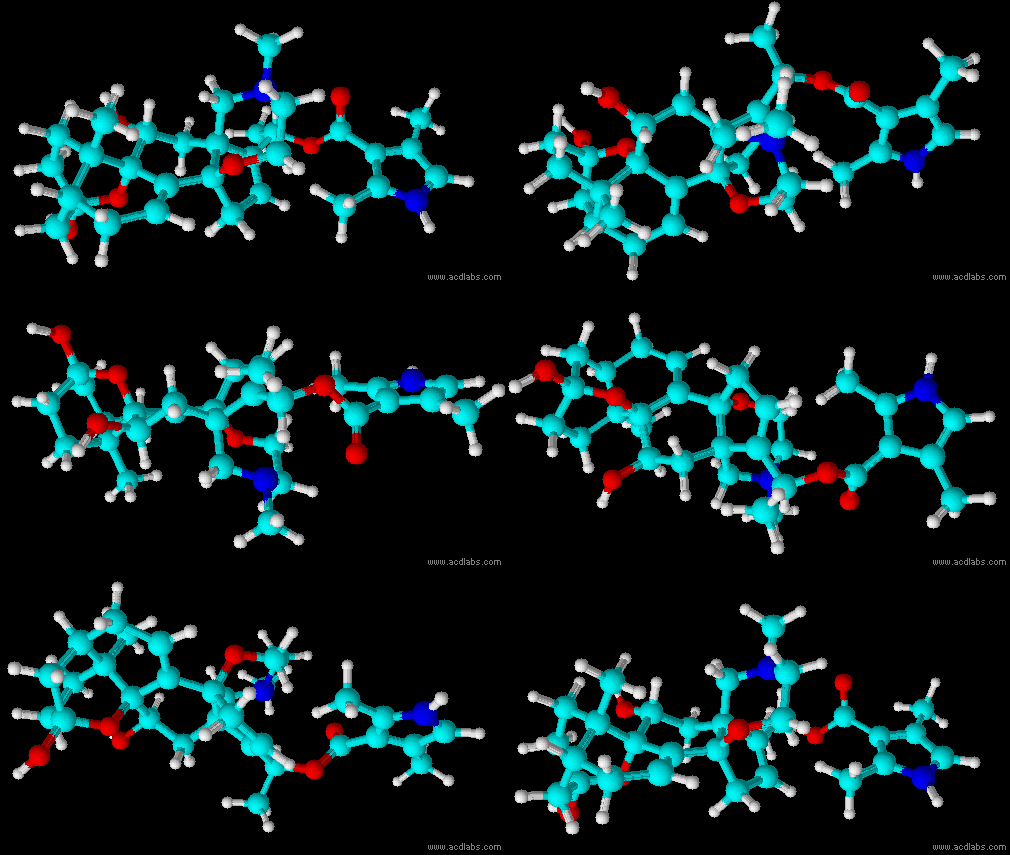
Ball and stick model of batrachotoxin’s molecular structure.

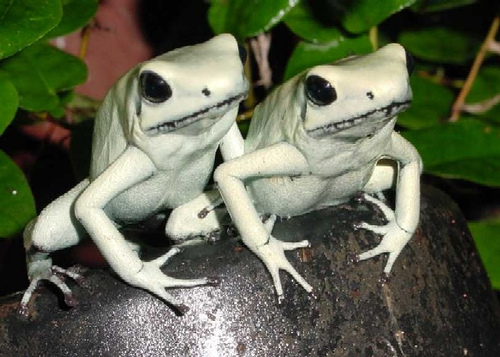
Funnily, these frogs are often kept by amphibian hobbyists as pets. It’s okay, though, because captive raised frogs aren’t toxic at all and can be handled freely for as long as the animal will tolerate it. All the poison comes from their diet and captive frogs’ diets are devoid of the prey that gives them their deadly defense. However, wild caught golden poison frogs are dangerous. Even after a change of diet, the toxins can linger in the frog’s body for years afterward, so it is inadvisable to keep anything but a captive bred golden frog. As the name states, they obviously come in a lovely, bright gold color, but there are also a variety of other color morphs. These include the orange morph and mint morph.

Mint morph

31647336532_65400c767d_z

Orange morph by John Clare on Flickr.

As beautiful as golden poison frogs are, stay well away if you ever go to Colombia and find one! You wouldn’t even be able to be sorry if you got too close because you’d be dead.

References:
1. Gratwicke, Brian. “Golden Poison Frog.” WAZA. World Association of Zoos and Aquariums, n.d. Web. 25 June 2015. <http://www.waza.org/en/zoo/choose-a-species/amphibians/frogs-and-toads/phyllobates-terribilis&gt;.

2. Patocka, Jiri, Kräuff S. Wulff, and María V. M. Palomeque. “Dart Poson Frogs and Thier Toxins.” Ed. Colonel R. Price. The ASA Newsletter 74 (1999): n. pag. Applied Science and Analysis. Web. 24 June 2015. <http://www.asanltr.com/ASANews-99/995frogs.htm&gt;.

3. Stuart, Sean K. “The True Poison-Dart Frog: The Golden Poison Frog.” Frogs. Herpetologic.net, n.d. Web. 24 June 2015. <http://www.herpetologic.net/frogs/caresheets/terribilis.html&gt;.

4. Alvarez, Mariela C. and Wiley, Mary. “Phyllobates terribilis”. Animal Diversity Web. University of Michigan Museum of Zoology, 20 Aug. 2011. Web. 24 June 2015. http://animaldiversity.org/accounts/Phyllobates_terribilis/

5. Wunderli, Michael. “Golden Poison Frog (Phyllobates Terribilis)” Encyclopedia of Life. Eol.org, n.d. Web. 25 June 2015. <http://eol.org/pages/1039238/details&gt;.

Photo Links:
1.https://flic.kr/p/6wgLdn

2.http://www.batrachotoxin.com/batrachotoxin720.gif

3.http://vignette4.wikia.nocookie.net/reptiles/images/4/44/Cuddling_Terribilis.jpg

4.https://flic.kr/p/QdySzj