The Tree of Death – Manchineel

Plants can be terrifying organisms. Trees, however, are generally not often counted among those to be feared. For the vast majority of species, the only harm they are capable of inflicting is caused by falling over at an inopportune moment in time. This is wildly not the case for the manchineel tree (Hippomane mancinella L.). Native to the tropical Americas, primarily Central and South America, the West Indies, and the peninsula of Florida, this plant is commonly known as arbol de la muerte and manzanilla de la muerte, meaning the tree of death and little apple of death, respectively (Adolf & Hecker 2004; Andreu & Friedman 2012; Boucaud-Maitre et al. 2019). Within the genus name, you may notice a familiar name: hippo. This is the Greek word for horse and you might be wondering what horses have to do with a toxic plant. The second part of the genus, mane, is derived from mania, referring to madness. As a whole, Hippomane essentially means horse madness. An ancient Greek philosopher, Theophrastus, bestowed this name upon a plant native to Greece that apparently caused horses to act crazy after eating it. Later on, Linnaeus then gave this same name to the manchineel tree when he described it (Andreu & Friedman 2012). Now that we have addressed the hippo in the room, what makes this tree so damn awful?

A stand of manchineel trees. Not the red paint on some of the trunks, designating them as dangerous. (Wikimedia Commons)

Typically growing to 20 feet tall or so but capable of reaching heights as great as 50 feet, the manchineel is a member of the spurge family, Euphorbiaceae (Andreu & Friedman 2012; Hack 2026; Lauter 1952). This diverse family is famous for the latex that damaged plants produce. You may have even experienced this yourself if you have ever broken a poinsettia leaf during the holidays. It will ooze a milky sap that is slightly irritating to the skin, but nothing more harmful than that. The vast majority of the family is similar. Some, like the rubber tree (Hevea brasiliensis Muell. Arg), are even greatly beneficial to our modern lives through providing a product that has countless uses (Guerra et al. 2021; Jacob et al. 1993). Just like its cousins, the manchineel tree also produces a natural latex (Adolf & Hecker 2004; Hack 2026). But unlike other members of its family, the sap and tissues of this plant are packed with highly toxic compounds that are capable of causing damage, even death, in a wide variety of ways. The main components that make it so dangerous are Hippomanin A and a group of 18 phenolic compounds consisting of various plant toxin chemical groups (Aluja et al. 2020). Direct contact with any part of the plant can result in inflammation, burning, blistering, and formation of lesions (Blue et al. 2011; Pitts et al. 1993). If the sap gets into the eyes, it can cause severe conjunctivitis and inflammation of the cornea leading to intense pain, blurring of the vision, and potentially temporary or permanent blindness (Howard 1981; Munoz & Norton 2024; Pitts et al. 1993). I know what you’re thinking: “That’s easy! I just won’t touch it and I’ll be fine.” Unfortunately, that’s not the case. Even if you don’t directly touch the manchineel, it can still harm you. All you need to do is just be near it. There are many instances of people taking shelter from the rain under this tree, only to be severely wounded from the water mixing with the toxic sap and dripping onto the body (Blue et al. 2011). Cutting any part of the tree creates sawdust full of these dangerous compounds that can come into contact with the skin and eyes and even be inhaled. Burning the wood releases poisonous smoke that can irritate the lungs, eyes, and skin (Munoz & Norton 2024; Muscat 2019).

Leaves and flower spike (Wikimedia Commons)

The fruits of the manchineel are small, about the size of a golf ball, but they resemble a greenish-yellow apple (hence manzanilla de la muerte) and have a similar smell. They can commonly be found scattered on the ground underneath the canopy of the trees or strewn about the beaches they call home. Due to its enticing nature, many a person has mistakenly eaten the fruit. Those who have done so often report an initially pleasantly sweet taste, quickly followed by an intense, burning pain (Stickland 2000). Eating even just a small amount can progresses from pain into dysphagia, excessive salivation, nausea, vomiting, abdominal pain, and diarrhea (Boucaud-Maitre et al. 2019; Strickland 2000). It can also result in ulceration and bleeding of the mouth, esophagus, and stomach (Carroll 1952; Boucaud-Maitre et al. 2019). In some cases, and depending upon how much fruit has been ingested, symptoms can advance to changes in heart rhythm, hypotension, depression of the central nervous system, and potentially death (Hack 2026; Pitts 1993). But eating the fruit alone is not necessary to experience the horrors of the manchineel. Water saturated with leaves and branches becomes poisonous as well (Carroll 1952; Hack 2026; Pitts et al. 1993).

The apple-like fruit of a manchineel (Credit: Hans Hillewaert)

Despite its fearsome nature, the manchineel isn’t all bad. The Kalinago and other Indigenous peoples of the lesser Antilles and Caribbean have historically used the noxious sap to coat their arrows for hunting purposes (Adolf & Hecker 2004; Boucaud-Maitre et al. 2019; Munoz & Norton 2024; Muscat 2019). It is also culturally important for its use in medicines to treat a variety of ailments (Andreu & Friedman 2012; Carroll 1952; Lauter et al. 1952). The root systems of these trees also help give structure to the seashores where they occur, preventing beach erosion (Pitts 1993). Although toxic to many animals, some appear to be immune and will readily eat the fruit or use the trees as habitat (Andreu & Friedman 2012). The small green flowers of the manchineel provide nectar to native pollinators, and honeybees will even create honey from it, which is reportedly non-toxic (Adolf & Hecker 2004; Pitts 1993). Pollinators are not the only insects with a relationship to this plant. Aluja et al. (2020) have explored an extremely close interaction between the manchineel and a species of fruit fly (Anastrepha acris) that exclusively feeds on its fruit. The larvae of the fly appear to have metabolic machinery, most likely microbes, capable of breaking down the toxic compound, Hippomanin A, within the plant’s tissues. This in turn makes the fly’s larvae a suitable and safe host for the endoparasitoid wasp, Doryctobracon areolatus (Aluja et al. 2020).

A warning sign for nearby manchineel trees (Wikimedia Commons)

The manchineel’s reputation as the world’s most dangerous tree has led to its eradication across most of its native range in Florida (Andreu & Friedman 2012; Boucaud-Maitre et al. 2019; Hack 2026; Munoz & Norton 2024; Wunderlin et al. 2025). Because of this and general habitat loss within the state, it is currently listed as an endangered species and only resides in places that are still wild such as the Everglades (Andreu & Friedman 2012; Munoz & Norton 2024; Wunderlin et al. 2025). It is still locally abundant throughout much of its range outside of Florida, however, thus posing a potential threat to those who are unfamiliar with it (Botanic Gardens Conservation International (BGCI), & IUCN SSC Global Tree Specialist Group 2019). As with any organism that can be dangerous to humans, it is important not to villainize the manchineel. Yes, it is capable of inflicting massive amounts of harm; but if it is given space and treated with the respect it deserves, it poses no threat to us and provides many ecological and cultural benefits. The more we learn about it, the more secrets we may uncover as to those benefits, particularly in medicine. The manchineel is truly an incredible and fascinating plant that exemplifies the phenomenal diversity of our planet.

References:

1. Adolf, W., & Hecker, E. (2004). On the Active Principles of the Spurge Family, X. 1,2Skin Irritants, Cocarcinogens, and Cryptic Cocarcinogens from the Latex of the Manchineel Tree. Journal of Natural Products, 47(3), 482–496. https://doi.org/10.1021/np50033a015

2. Aluja, M., Pascacio-Villafán, C., Altúzar-Molina, A., Monribot-Villanueva, J., Guerrero-Analco, J. A., Enciso, E., Ortega, R., Acosta, E., & Guillén, L. (2020). Insights into the Interaction between the Monophagous Tephritid Fly Anastrepha acris and its Highly Toxic Host Hippomane mancinella (Euphorbiaceae). Journal of Chemical Ecology, 46(4), 430–441. https://doi.org/10.1007/s10886-020-01164-8

3. Andreu, M. G., & Friedman, M. H. (2012). Hippomane mancinella, Manchineel: FOR302/FR370, 7/2012. EDIS, 2012(10). https://doi.org/10.32473/edis-fr370-2012

4. Blue, L. M., Sailing, C., DeNapoles, C., Fondots, J., & Johnson, E. S. (2011). Manchineel Dermatitis in North American Students in the Caribbean. Journal of Travel Medicine, 18(6), 422–424. https://doi.org/10.1111/j.1708-8305.2011.00568.x

5. Botanic Gardens Conservation International (BGCI), & IUCN SSC Global Tree Specialist Group. (2019). IUCN Red List of Threatened Species: Hippomane mancinella. The IUCN Red List of Threatened Species. IUCN Red List of Threatened Species. https://www.iucnredlist.org/en

6. Boucaud-Maitre, D., Cachet, X., Bouzidi, C., Riffault-Valois, L., Dupuy, C., Garnier, R., & Langrand, J. (2019). Severity of manchineel fruit (Hippomane mancinella) poisoning: A retrospective case series of 97 patients from French Poison Control Centers. Toxicon, 161, 28–32. https://doi.org/10.1016/j.toxicon.2019.02.014

7. Carroll, M. N. (1952). The Pharmacology and Toxicology of Extracts, Extractives and Crystalline Substances Obtained from Hippomane Mancinella L. [Ph.D., University of Florida]. https://www.proquest.com/docview/302035970/citation/15C0955433894D24PQ/1

8. Guerra, N. B., Sant’Ana Pegorin, G., Boratto, M. H., de Barros, N. R., de Oliveira Graeff, C. F., & Herculano, R. D. (2021). Biomedical applications of natural rubber latex from the rubber tree Hevea brasiliensis. Materials Science and Engineering: C, 126, 112126. https://doi.org/10.1016/j.msec.2021.112126

9. Hack, J. B. (2026). Toxicology Answer: The Manchineel Tree. ACEP Now. https://www.acepnow.com/article/toxicology-answer-the-manchineel-tree/

10. Howard, R. A. (1981). Three Experiences with the Manchineel (Hippomane spp., Euphorbiaceae). Biotropica, 13(3), 224–227. https://doi.org/10.2307/2388129

11. Jacob, J.-L., d’Auzac, J., & Prevôt, J.-C. (1993). The composition of natural latex fromHevea brasiliensis. Clinical Reviews in Allergy. https://doi.org/10.1007/bf02914415

12. Lauter, W. M., Fox, L. E., & Ariail, W. T. (1952). Investigation of the Toxic Principles of Hippomane mancinella, L. I. Historical Review*. Journal of the American Pharmaceutical Association (Scientific Ed.). https://doi.org/10.1002/jps.3030410412

13. Munoz, M., Whitecar, S., & Norton, S. A. (2024). Beware the Manchineel: A Case of Irritant Contact Dermatitis. Cutis, 114(4), E14–E17. https://doi.org/10.12788/cutis.1123

14. Muscat, M. K. M. (2019). Manchineel Apple of Death. EJIFCC, 30(3), 346–348.

15. Pitts, J. F., Barker, N. H., Gibbons, D. C., & Jay, J. L. (1993). Manchineel keratoconjunctivitis. The British Journal of Ophthalmology, 77(5), 284–288. https://doi.org/10.1136/bjo.77.5.284

16. Strickland, N. H. (2000). Eating a manchineel “beach apple.” BMJ : British Medical Journal, 321(7258), 428. https://doi.org/10.1136/bmj.321.7258.428

17. Wunderlin, R. P., Hansen, A. R., Frank, A. R., & Essig, F. B. (2025). Hippomane mancinella / Species Page / Plant Atlas [Academic]. Institute for Systemic Botany. Atlas of Florida Plants. https://florida.plantatlas.usf.edu/plant/species/2806

Are Pokémon Animals?

I have mentioned Pokémon before in my articles, but have only in passing. I now think it is time to take a scientific approach and look at these interesting, fictional organisms through the lens of science. Before we explore the title question, we first need to define what constitutes an animal. Animalia is one of the seven (as per the most recent revision of biological classification) kingdoms of life. The others are Plantae, Fungi, Protozoa, Chromista (diatoms, brown algae, etc.), Archaea, and Bacteria. Animals are multicellular, eukaryotic, heterotrophic organisms that lack cell walls. The cells are grouped into tissues, with each tissue having a specific purpose. Sponges, which are essentially just a clump of cells without any body symmetry, are the exception. As there are no sponge Pokémon to date, we do not have to worry about this. Animals must be able to move voluntarily and independently at some stage in their lives and develop until they reach a fixed body plan.

tol1

Protista is used here rather than Protozoa, but they both constitute the same types of organisms.

So, are Pokémon animals? The answer is, it’s hard to tell, but they probably are. There isn’t a way to know whether or not a Pokémon’s cells have cell walls because there is no data about their cellular structure, so we don’t have this to go on. All Pokémon appear to have body symmetry, one exception being Ditto. Ditto throws a wrench into the equation because it has an amorphous form, but can reorganize its body structure to take on the appearance and abilities of any other Pokémon. However, Ditto may be the result of a failed human experiment to clone Mew, the ancestor of all Pokémon. For this reason, we will exclude Ditto from our discussion because it was created through human intervention and did not evolve naturally. We’ll come back to Pokémon “evolution” later.

d34dc8b3ced7ee3023be42864f33cd5399bc3228_hq

This Ditto is sad because it doesn’t fit in.

Another stumper is when we start to consider Pokémon diets. Most seem to be heterotrophs, like animals, but some are described feeding exclusively on rock or metal (lithotrophs), while some can photosynthesize (autotrophs). Heterotrophs are organisms that must use organic carbon sources for energy because they cannot fix it themselves like other organisms. Plants can. They convert light energy into more complex organic compounds through photosynthesis. A handful of Pokémon actually are able to sustain themselves on nothing more than electricity. Does this mean that these rock, metal, and electron eating Pokémon species are not animals? Not necessarily. We haven’t learned all there is to know about Animalia yet and it is possible that there are animals yet to be discovered with highly diverse diets that deviate from the standard heterotroph. Many of Pokémon are also capable of enjoying Pokémon food that is made from berries and other organic material, as well as treats such as Pokéblocks (candy for Pokémon) or Poffins (a pastry-like Pokémon treat). Even Pokémon of the Ghost Type, the majority of which appear to be non-corporeal beings, will take Pokémon food if it is offered.
Many real life animals will often consume non-organic substances such as clay to supplement their diets or neutralize toxins in their food. However, this alone is not enough to sustain them. Animals MUST ingest other living things or their products to survive. There is nothing that says that the stranger Pokémon species need to eat something other than iron ore or enough dirt to make an entire mountain.

Aron

Aron, the iron eater.

600px-246larvitar

Larvitar, the mountain eater.

Some Pokémon are very plant-like. These are the Grass Type Pokémon. Many of them have abilities like Chlorophyll or Solar Power. Some of these Pokémon species look more like animals that others, though, so how can they be plants? The answer is: they don’t have to be if they participate in mutualism. Mutualism is a form of symbiosis in which both parties benefit from an interaction. It could be that all of the photosynthesizing Pokémon are hosts for special algae or other organisms that can fix carbon so that it is usable. In return, these Pokémon provide their little sun factories with precious nutrients. A few existing animals do this too, so it’s not really that out there to consider it in Pokémon.
Pokémon fill all the requirements of being animals except for their diets. We are still learning much about many strange metabolisms and food preferences in the animal kingdom, so I don’t think we can exclude Pokémon from Animalia just for this, as I mentioned above. We’ll keep exploring their biology.
Getting back to that “evolution” thing. Most, but not all Pokémon, go through “evolution”. Pokémon “evolution” is different from the Darwinian evolution that we know and love. It is predictable and occurs within the same individual. Pokémon evolution is analogous to metamorphosis in the real world. In fact, there are some Pokémon species that perfectly follow metamorphosis in real animals like butterflies, moths, and frogs. Pokémon can also be confirmed to have a Darwinian evolutionary history simply because of the fact that there are “ancestor Pokémon” like Mew that contain the basic genetic blueprints of all future Pokémon, and “fossil Pokémon” such as Omanyte and Anorith. Natural Selection seen in the Pokémon world emphasizes the presence of Darwinian evolution as well. Different regions provide a wide variety of habitats and the Pokémon found in these areas are well adapted to the conditions. This suggests that there is a process of adaptation over generations of Pokémon that resulted in the ones we see today that thrive in their respective environments.

mew-pokemon

Mew, the ridiculously cute ancestor of all Pokémon.

At this point, I feel that is safe to place Pokémon within Animalia. If they existed, they would make up their own separate phylum. Pokémon are incredibly diverse, and many don’t even look like they are related at all. But, just take a look at our own phylum, Chordata. There is a ridiculous amount of variation within it. Chordata contains animals ranging from simple, filter feeding tunicates, all the way to elephants, whales, birds, snakes, and of course, humans. Pokémon can take the form of gargantuan, dragon like creatures, or something as out there as a living pile of garbage. As briefly mentioned, there are different Types (18 in all) of Pokémon. Pokémon of the same type share similar abilities, weaknesses, and strengths. There is a Primary Type, and a Secondary Type. These Types could be thought of as analogous to classes within biology. Secondary Types would comprise the subclasses. For example, a Pokémon could be of the Fire Type class, but also belong to the Ground Type as its subclass.

types

The 18 Types of Pokémon.

But why did I choose class rather than some other higher or lower taxonomic ranking? It is because class seems to fit the variation observed within Pokémon types quite nicely and is a good reflection of a class such as Mammalia (our class). Every member of Mammalia is, by definition, a mammal. The blue whale is the most massive animal to have ever lived on this planet, yet falls into the same biological class as the tiny, extinct Batodonoides vanhouteni (a shrew-like mammal) and egg-laying mammals like platypuses and echidnas. Though they differ greatly, all these animals have a handful of defining features that set them apart from any other class. As is their namesake, all mammal species are capable of producing milk through mammary glands. Likewise, a Pokémon belonging to a specific Type will also share similar traits with fellow members of that Type that others don’t possess (unless those others have it as their Secondary Type/subclass). Water Types, for example, all appear to have increased fitness in rain and become weakened and dehydrated by hot, dry weather.

swampert-full-890856

Swampert is a Water/Ground Pokémon. This means that its Primary Type is Water and its Secondary Type is Ground. Because of this, it has the unique traits of both Types. It is also one of my favorite Pokémon!

As with animals, there are many other ways to rank Pokémon taxonomically. We could break them into phyla, orders, families, genera, and individual species. Analysis of all taxonomic rankings like this would probably go on for pages and pages, so we will cut it off at classification by Type and the educated assumption that Pokémon are in fact part of Animalia. Even though these creatures are not real, it is always fun to speculate and dig into the “what ifs”. This curiosity and exploration is the whole basis for science fiction, one of the most popular genres of all time, and it enriches our imaginations and our lives.

References:
1. Myers, Phil. “Animalia (animals).” Animal Diversity Web. Univerisity of Michigan Museum of Zoology, 2001. Web. 04 Dec. 2015.

2. Ruggiero, Michael A., et al. “A higher level classification of all living organisms.” PloS one 10.4 (2015): e0119248.

3. Venn, A. A., J. E. Loram, and A. E. Douglas. “Photosynthetic symbioses in animals.” Journal of Experimental Botany 59.5 (2008): 1069-1080.

4. Trench, R. K. “The cell biology of plant-animal symbiosis.” Annual Review of Plant Physiology 30.1 (1979): 485-531.

5. Barbo, Maria S. The Official Pokémon Handbook. New York: Scholastic, 1999. Print.

6. “Type.” Bulbapedia. Web. 23 Dec. 2015.

7. Bloch, Jonathan I., Kenneth D. Rose, and Philip D. Gingerich. “New Species of Batodonoides (lipotyphla, Geolabididae) from the Early Eocene of Wyoming: Smallest Known Mammal?”. Journal of Mammalogy 79.3 (1998): 804–827.

Photo Links:
1.http://www.tanelorn.us/data/mycology/myc_kingdom.htm

2.http://www.aminoapps.com/page/pokemon/2097774/ditto

3.http://www.serebii.net/card/risingrivals/057.shtml

4.http://bulbapedia.bulbagarden.net/wiki/Larvitar_%28Pok%C3%A9mon%29

5.http://attackofthefanboy.com/guides/get-mew-pokemon-red-blue-yellow/

6.https://people.rit.edu/~dap4092/230/project1/basics.html

7.http://www.deviantart.com/art/Swampert-118686577

Could “The Last of Us” Really Happen?

UPDATE 4/19/22: Newer research has suggested that the ants that are infected with O. unilateralis are not in fact controlled via manipulation of the brain. Rather, there seems to be a chemical means by which the fungus forces the ant to bite the leaf vein. The study found no evidence of fungal cells inside the actual brain. However, hyphae were abundant throughout the head of the ant and the rest of its body, including inside the muscle fibers themselves, creating a complex network. The exact mechanisms behind the behavioral manipulation are still not known and more studies need to be done. With that in mind, please know that I am discussing the structure and function of ant brains in this article, as it helps exemplify the differences between an insect and vertebrate brain for the purpose of speculation.

For those who don’t know, The Last of Us is a dark, yet beautifully crafted survival horror game that explores what the world would be like if the majority of the human population were infected by a mutated strain of Ophiocordyceps unilateralis. This video game is critically acclaimed for its storytelling, graphics, and gameplay. It is considered a masterpiece by most of its reviewers and by its players. From the little bit I have played, I would absolutely agree. There are few developers that are able to take a real world scientific event, such as an insect being manipulated by a parasitic fungus, and implement the core concept realistically in a video game. Naughty Dog, the developer of The Last of Us, does this fantastically well.

71-hlREKk6L._AC_SY741_

Joel and Ellie are the game’s core characters

Ophiocordyceps unilateralis is in fact a real fungus. This species (actually a whole complex of species referred to collectively as Ophiocordyceps unilateralis sensu lato, meaning “in a broad sense” – I will refer to this species complex just as O. unilateralis from here) specifically targets ants, generally of the Camponotus genus, and takes over their bodies in order to move them to a location with ideal conditions for its reproduction. One of the most interesting things about this fungus is how precisely it manipulates its host. A 2009 study by Andersen et al. in The American Naturalist found that ants infected with O. unilateralis almost always died gripping a vein on the underside of a leaf (98%) and that this location was significantly more towards the north-northwest side of the plant than any other direction. Camponotus ants were found almost exclusively at a height of 25 centimeters from the forest floor, while closely related Polyrhachis ants were seen at a mean height of 78.43 centimeters. This kind of behavioral control is known as an extended phenotype. The gene expression of a parasite within a host’s tissue causes aberrant host behavior that increases the parasite’s fitness. Keep in mind that the ant species in the study colonize the canopy, not the forest floor, so this is extremely complex behavioral manipulation. Under the fungus’s control, these infected ants are traveling very far from their initial location. Many infected ants will often die in areas where others already have because the conditions in these places are favorable for O. unilateralis. This leads to places, called graveyards, that have a high density of corpses. Any healthy ant happening to walk through such an area will likely become infected by the deadly spores.

An ant with its jaws locked in a “death grip”.

When O. unilateralis spores come into contact with an ant, they adhere to it and start to penetrate its cuticle. After this, fungal cells start to infest the ant’s entire body and begin to alter its behavior. The infected ant then leaves the colony and starts the trek down toward the forest floor. Once a perfect spot is reached, the ant will bite the vein of a leaf and die with its jaws locked in place. This is known as the “death grip”, and keeps the ant from falling off the leaf. Any ants that end up dying within the colony due to infection will be carried far away by other workers. Within a few days, the stroma, or stalk, of the fungus will erupt from the back of its host’s head and develop a stromal plate that releases spores when mature. By this point, most of the ant’s original tissue has been replaced by fungus.

Saggital section of a dead Camponotus ant filled with fungus from The American Natrualist – W = white, Bl = black, O = orange, and P = pareithecial plate, which is where the spores originate. (The life of a dead ant: the expression of an adaptive extended phenotype. Andersen et al. 2009)

The ants in the video below are not Camponotus or Polyrhachis ants, and the fungus is not O. unilateralis so the hosts show a different behavior. However, it still illustrates the process well.

What a horror it would be if humans were susceptible to such a fate! The question is, could this actually happen? Let’s consider the ant brain for a moment. It has all the general features of a typical insect brain and is very simple compared to a vertebrate brain. However, ants have more well developed areas associated with memory and learning. These “higher” functions are controlled by the mushroom bodies. Mushroom bodies are much larger in worker ants than they are in the male soldiers. Workers must navigate varying spacio-temporal environments using multiple cues and also remember where food is and where home is. For ants, workers are the most “intelligent”. Still, one lone worker is of no use. It takes the whole colony to have a properly functioning and flourishing nest. An entire colony of ants, which can be up to millions of individuals, does not even come close to matching the complexity of a single human brain. If a fungus were to develop an ability to infect and alter the behavior of humans, this would probably take a ridiculously long time to evolve. Human beings would most likely not even be around any longer. But, let’s just roll with it and say that this could happen. What would it be like and how does The Last of Us compare?

Simplified ant brain from Recognition of social identity in ants (Bos and d’Ettorre, 2012).

We’ll start with the mode of infection. In the video game, people seem to become infected by breathing in the spores of the mutant O. unilateralis strain. Those who wear a special breathing bask in spore filled areas do not become infected. This appears to check out. Human skin is likely to be much less susceptible to becoming invaded by spores, simply because it is so much thicker and has many more layers than insect cuticle. Other fungi are able to infect hosts via inhalation (like some molds), so it would be no different for a mutant fungus; the infection would just result in a different pathology. So getting infected by this fungus is not in question if you breathe the spores in, but you can also fall victim if there is an exchange of bodily fluids, such as from a bite. This is logical as well. If the fungus has infiltrated an infected person’s system as in ants, bodily fluids like saliva and blood may contain fungal cells. These could easily be passed on to a healthy human.

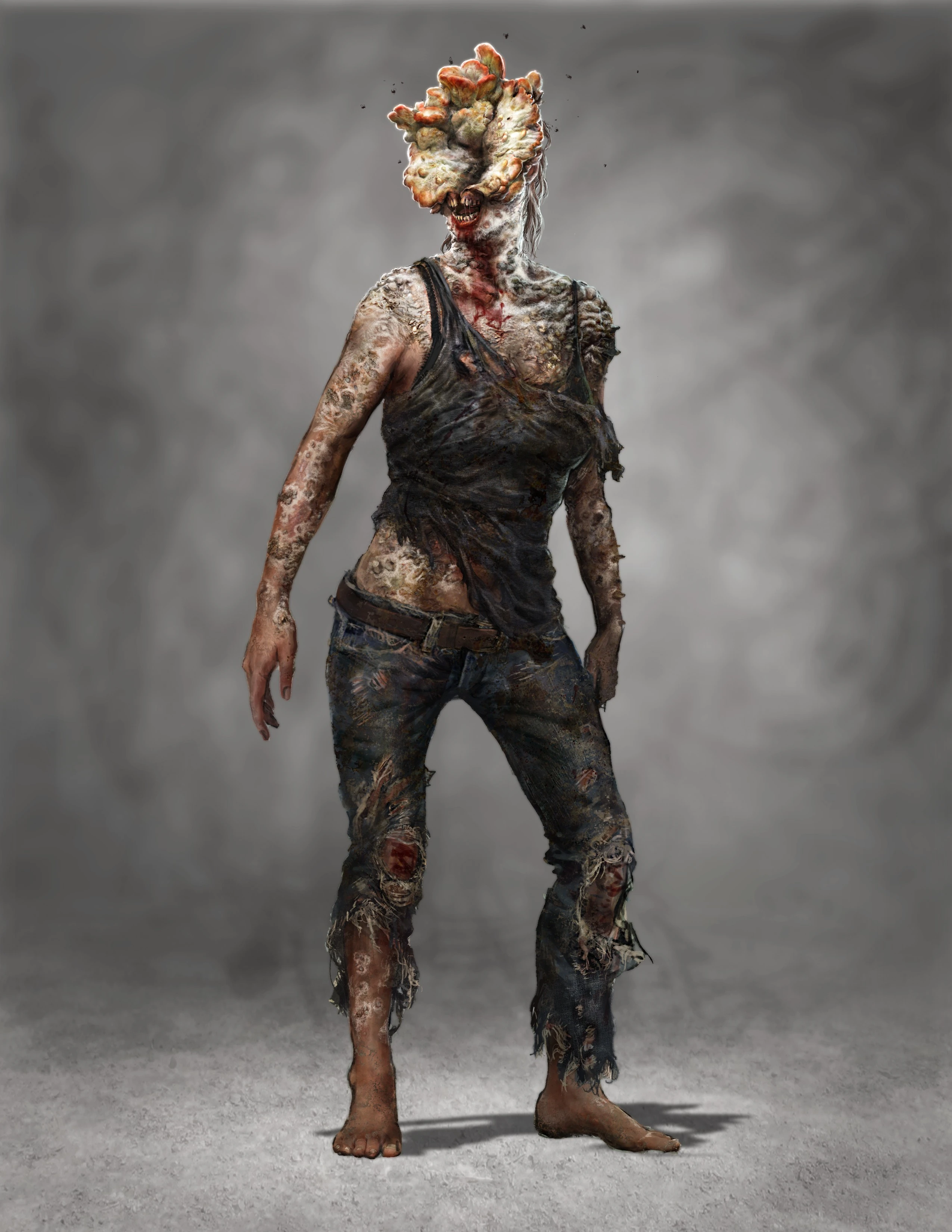
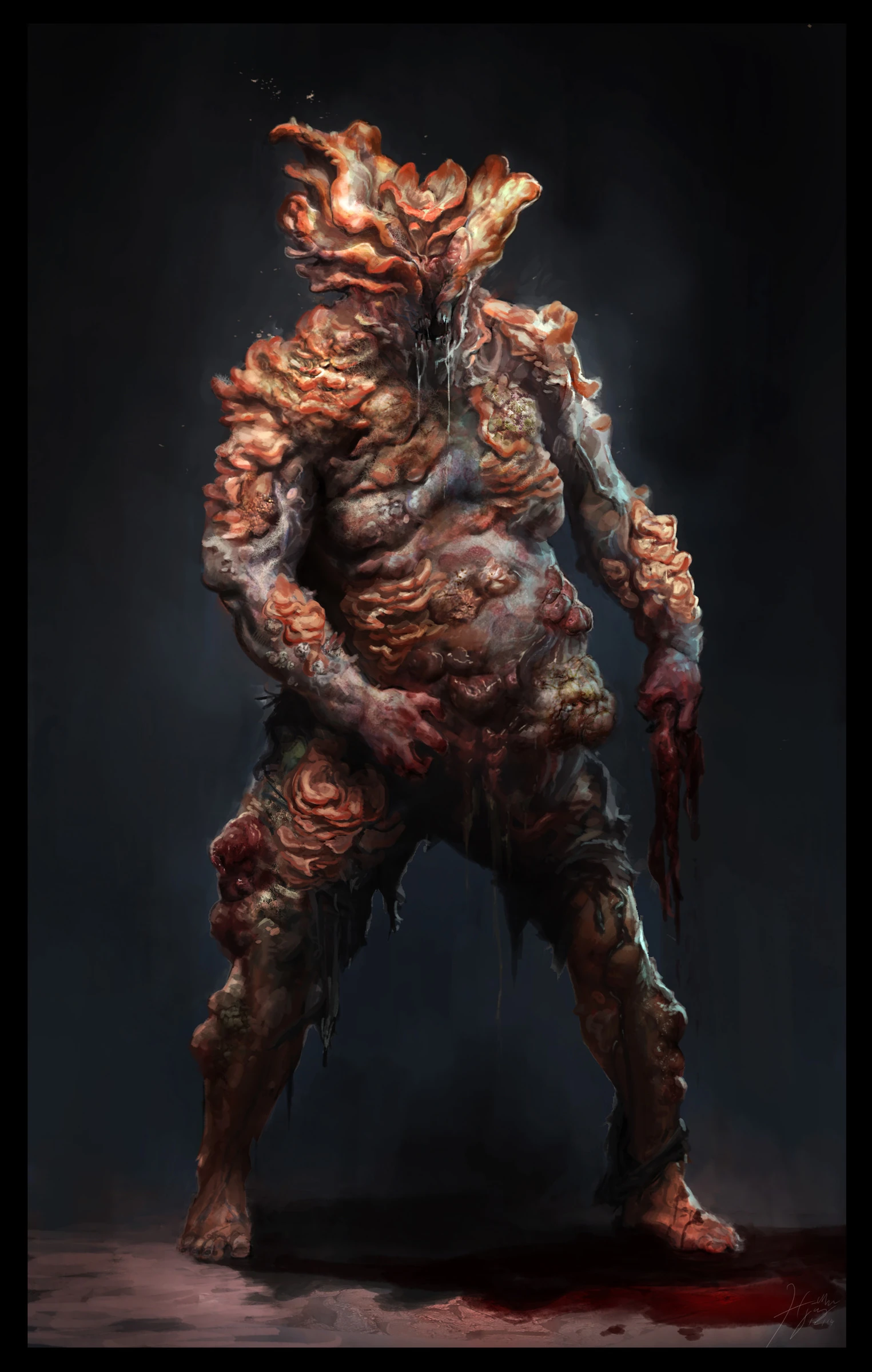
What about the behavioral and morphological alterations? In The Last of Us, any infected individual, even in the early stages, is being driven by the fungus’ gene expression and aims to spread the spores or cells to as many others as possible. There are four main stages of infection from this mutant O. unilateralis: Runners, Stalkers, Clickers, and Bloaters. All of these collectively are referred to as the Infected (noun) in the game. Individuals who have just been infected are classified as Runners. They still cling to a shred of their humanity, however small, and try to resist the fungus’ behavioral control. However, if they are startled or as the infection progresses, they will snap and attempt to attack anyone nearby who is healthy. Stalkers are fully controlled by O. unilateralis and start to show fungal growth on the face. This fungus strain attacks the eyes first, so they have poor vision and begin to exhibit primitive signs of echolocation. In Clickers, the face has been fully engulfed by fungal growth and rendered the host completely blind. These Infecteds use clicking and screeching to crudely survey their surroundings within a small radius. The growth on the head and face forms a roughly dish shaped plate that helps to direct the clicks. Bloaters are the final stage and can take 10-15 years to develop. The entire body of this Infected is now covered in fungus, some of it showing bioluminescence, and is therefore very physically hardy. Bloaters are also able to throw sacs of toxic powder both as a defense and an attack mechanism. Once the host finally dies, whatever tissue is left of the former person crumbles and is used by the parasite to complete its growth and release spores.

Infected_Final_Stage

The remaining tissues of the victim begin to crumble as the fungus spreads its spores.

Now to analyze the behavior of the Infected. All stages appear to seek out specific locations and stay there, unless stimulated to pass on the infection when a healthy individual is sensed nearby. This reflects the behavior of O. unilateralis controlled ants that travel until they find the optimal conditions for the fungus’s reproduction and then fix themselves to that spot. However, infected ants will leave the colony and do not show any aggressive behavior whatsoever toward other ants. Why would the Infected exhibit such an aggressive drive to bite or kill? We actually have a disease in existence that does just this. It’s called rabies virus. If rabies can infiltrate the brains of mammals and stimulate this type of behavior, it would not be a stretch to think that a mutant fungus could affect humans this way. Rabies in humans doesn’t present the same way that it does in other mammals; it resembles a bad flu, followed by agitated behavior and cognitive deficits, sometimes with hallucinations, delirium, and insomnia. Perhaps our mutant O. unilateralis would be able to incite the aggressive behavior seen in the games by affecting the brain in a similar way to rabies in non-human mammals. This could explain the Infecteds’ responses to healthy humans.

Clickers use crude echolocation to detect the presence of nearby humans and then go into a full sprint toward anyone they sense.

Runners display behavioral tendencies that would be expected. Since the fungus has only just started infiltrating the brain, it is not surprising that the victim would be scared and confused by what is happening. It makes sense that a person in this state would be very volatile and dangerous to approach. Stalkers tend to hide out of sight and only engage when someone lets their guard down. This is presumably because their vision is extremely poor and they must wait until the opportune moment in order to successfully attack. Clickers are harder to explain realistically. It would be highly unlikely that an Infected would suddenly develop the ability to navigate using clicks. This is a skill that must utilize learning and memory, parts of the brain no longer accessible to the victim. Very few humans are able to echolocate and those who are have refined their technique over years. Real world O. unilateralis is not able to direct ants to do things they are not already capable of; it simply takes advantage of abilities the insect already possesses. The sense that would be most beneficial to a Clicker is touch. Of course, sound is still an effective way of interacting with surroundings, but it would not be used for spatial navigation as in The Last of Us. This can be extrapolated to the Bloaters in the game as well, because they also use echolocation. All of these Infected will attack to kill. This is presumably because the fungus cannot kill immediately on its own, but can reach maturity faster in a dead body. So, when controlling a living human, O. unilateralis uses that person to its advantage by driving them to help speed up reproduction through the provision of corpses. If the host fails to make a kill, but manages to penetrate the skin of a healthy human, then the fungus still benefits because that person will become another Infected.

Bloaters take 10 to 15 years to develop and have hard fungal growth all over their bodies, giving them great resistance to blunt and penetrating forces.

Overall, the concept of The Last of Us is scientifically plausible, given enough time for O. unilateralis or a different species of Ophiocordyceps fungus to evolve the traits explored here. The intelligence and thought put into this game has given it so much more than most other video games can offer. These things make it different from your standard zombie apocalypse. It is scary because it feels like it could really happen, and this realness comes from its grounding in actual science. The infection seen in it is already a reality for many insects and other arthropods. They may not show the aggressiveness displayed by the Infected, but the behavioral manipulation seen in these animals is extremely effective at fulfilling the fungus’s needs. Maybe at some point in the future, the fictional scenario of The Last of Us could come to be. Who knows? The natural world is continually revealing so many things previously thought impossible.

References:
1. Gronenberg, Wulfila. “Structure and function of ant (Hymenoptera: Formicidae) brains: strength in numbers.” Myrmecological News 11 (2008): 25-36.

2. Evans, Harry C., Simon L. Elliot, and David P. Hughes. “Ophiocordyceps unilateralis: A keystone species for unraveling ecosystem functioning and biodiversity of fungi in tropical forests?.” Communicative & integrative biology 4.5 (2011): 598-602.

3. Hughes, David P., et al. “Behavioral mechanisms and morphological symptoms of zombie ants dying from fungal infection.” BMC ecology 11.1 (2011): 13.

4. Andersen, Sandra B., et al. “The life of a dead ant: the expression of an adaptive extended phenotype.” The American Naturalist 174.3 (2009): 424-433.

5. Pontoppidan, Maj-Britt, et al. “Graveyards on the move: the spatio-temporal distribution of dead Ophiocordyceps-infected ants.” PloS one 4.3 (2009): e4835.

6. “The Infected.” The Last of Us Wiki. Wikia, 2013. Web. 7 Oct. 2015. <http://thelastofus.wikia.com/wiki/The_Infected>.

7. “Signs and Symptoms – Rabies.” Centers for Disease Control and Prevention. Centers for Disease Control and Prevention, 15 Feb. 2012. Web. 08 Oct. 2015.

Photo and Video Links:
1.http://static.giantbomb.com/uploads/scale_large/9/93770/2419553-397060_386577108098888_427807760_n.jpg

2.https://i.guim.co.uk/img/static/sys-images/Guardian/Pix/pictures/2010/12/21/1292935214310/a-dead-worker-ant-004.jpg

3.http://ento.psu.edu/publications/DH1

4.https://www.youtube.com/watch?v=XuKjBIBBAL8

5.http://journal.frontiersin.org/article/10.3389/fpsyg.2012.00083/full

6.https://vignette.wikia.nocookie.net/thelastofus/images/3/3f/Infected_Final_Stage.jpg/revision/latest?cb=20130224030859&format=original

7.http://vignette4.wikia.nocookie.net/thelastofus/images/9/9d/Clicker.jpg/revision/latest?cb=20150928101722

8.http://vignette4.wikia.nocookie.net/thelastofus/images/8/8f/Bloater.jpg/revision/latest?cb=20150928101859

UPDATE: NEW CLOUDED LEOPARD CUBS!

UPDATE!!! 6/5/15
Four new clouded leopard cubs that were born in May at the Point Defiance Zoo & Aquarium in Tacoma, Washington are now officially on display! Go see them if you’re in the area! 🙂


http://www.king5.com/story/news/2015/05/19/1-week-old-clouded-leopard-cubs-at-point-defiance-healthy-and-adorable/27613921/